
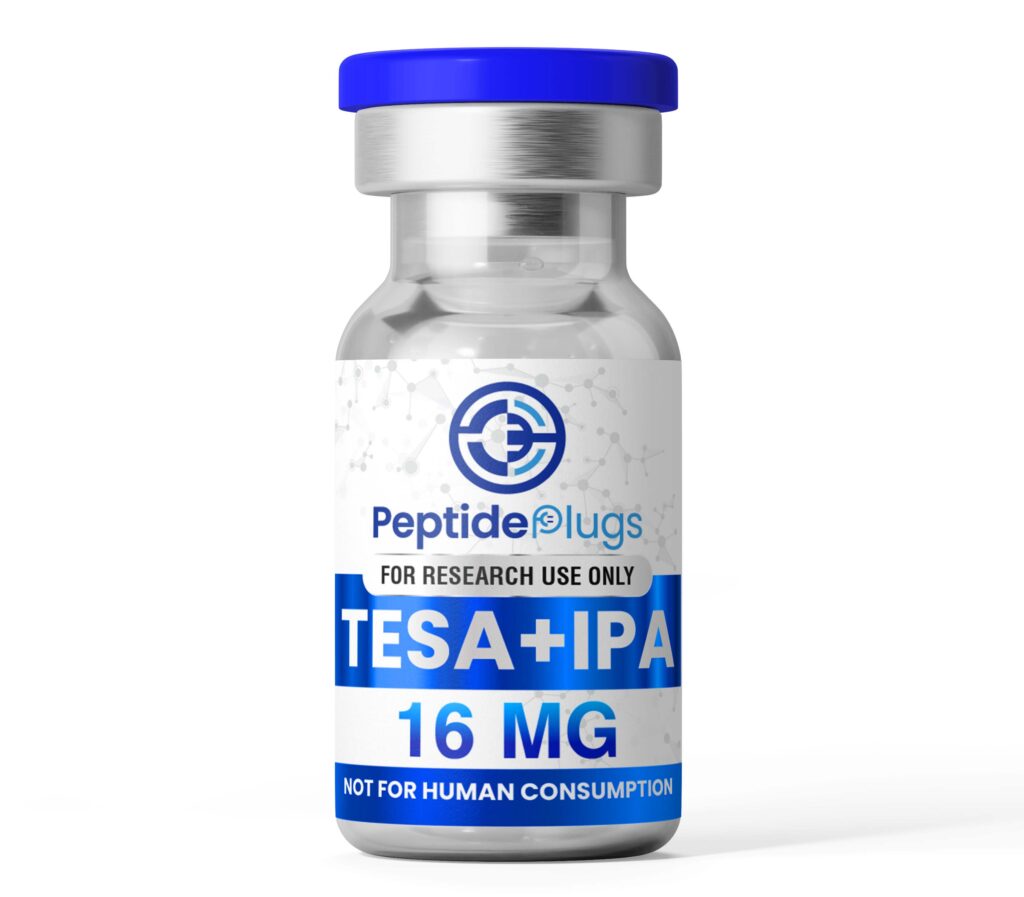
Tesamorelin + Ipamorelin (16mg – 13mg/3mg)
Price range: $95.00 through $570.00
Tesamorelin + Ipamorelin. Blended at the ratio that actually makes sense.
A pre-mixed 16mg blend pairing 13mg Tesamorelin with 3mg Ipamorelin — a ratio designed around the clinically studied Tesamorelin dose and a research-effective Ipamorelin dose, in one reconstitution.
What Each Compound Does
Tesamorelin is a stabilized analog of growth hormone-releasing hormone (GHRH). It binds GHRH receptors in the pituitary and stimulates pulsatile growth hormone release. It is the only GHRH analog approved by the FDA (as Egrifta, for HIV-associated lipodystrophy) and has the strongest clinical data of any peptide in this category, including documented reductions in visceral adipose tissue.
Ipamorelin is a selective growth hormone-releasing peptide (GHRP). It binds the ghrelin receptor and triggers GH release through a separate, complementary pathway. Unlike older GHRPs, Ipamorelin does not meaningfully elevate cortisol or prolactin in research, which is why it remains the go-to GHRP for stacking.
When a GHRH analog and a GHRP are used together, GH release is synergistic — measurably greater than either compound alone. This is the entire rationale for blending them.


Two upstream pathways converge on the same downstream output. Synergistic, not additive.
What’s in the Vial
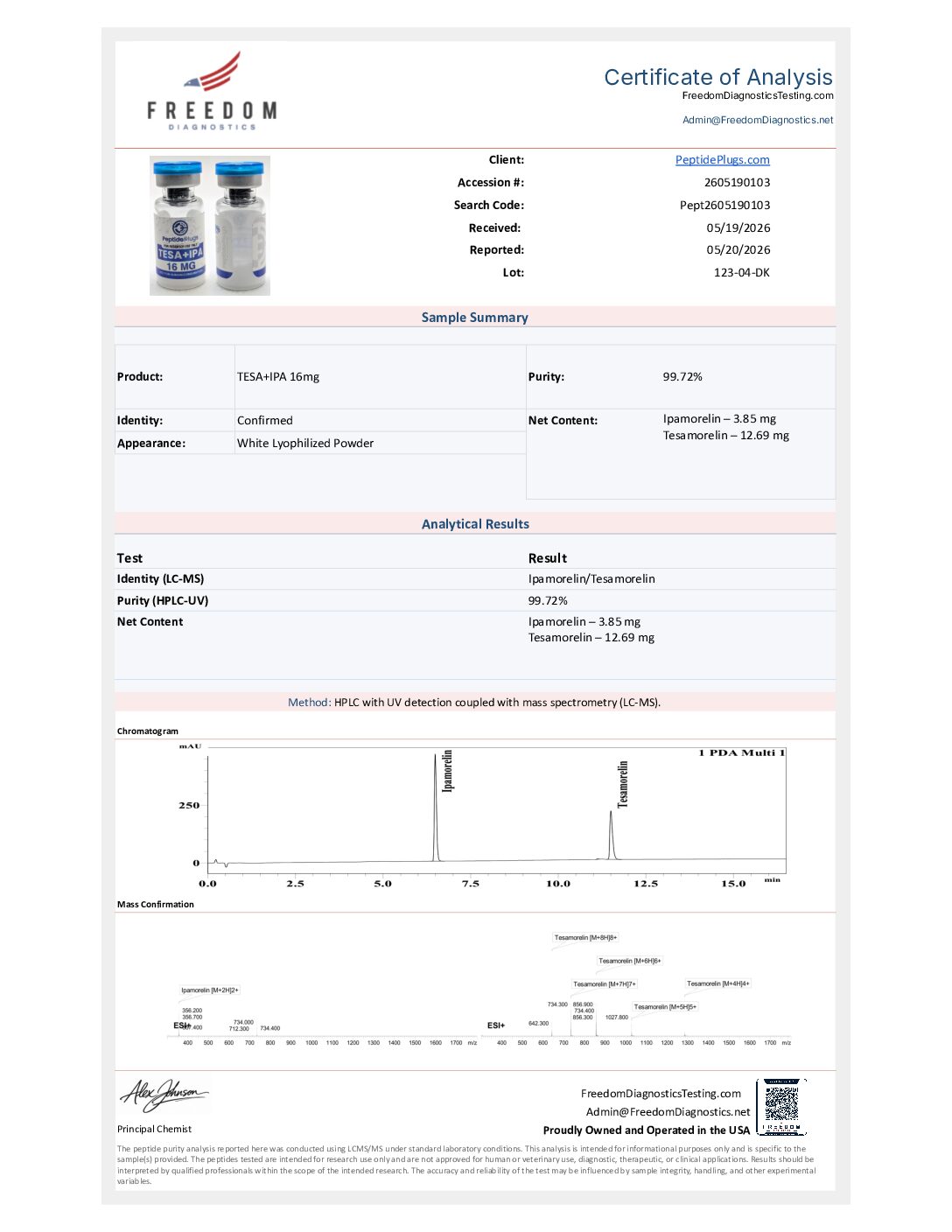
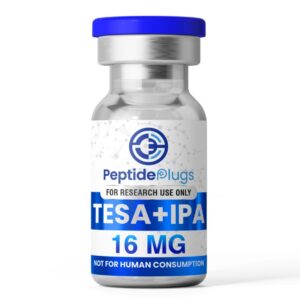
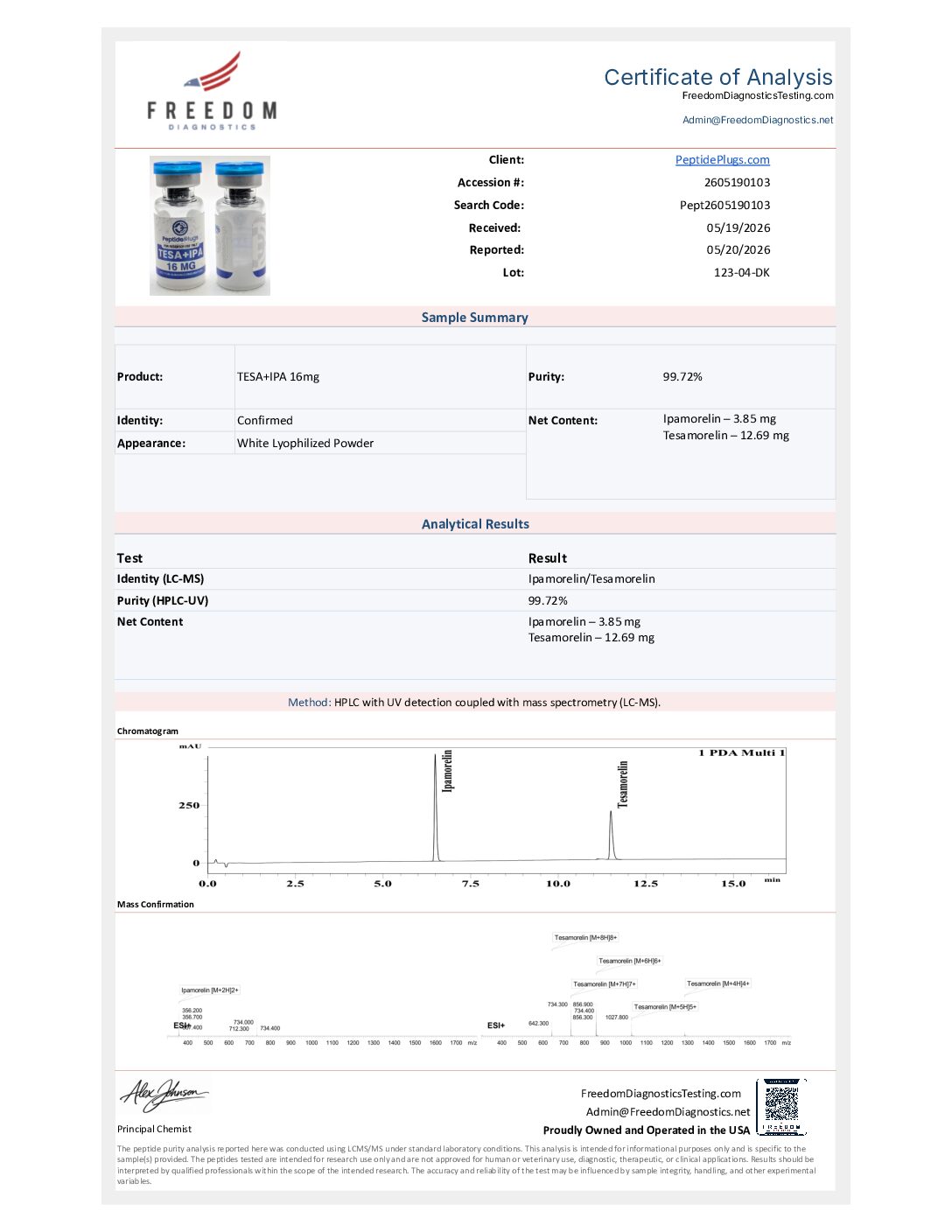
One lyophilized vial containing 13mg Tesamorelin and 3mg Ipamorelin pre-blended, for a total of 16mg active peptide. Reconstitute with bacteriostatic water. Tested for purity by third-party HPLC analysis. COA available on this product page.
- Synergistic GH release vs. either peptide alone (well-documented in GHRH + GHRP literature)
- Tesamorelin’s clinical track record on visceral fat reduction (CDC-NIH studies, FDA approval)
- Ipamorelin’s clean side effect profile vs. older GHRPs like GHRP-6 or Hexarelin
- Pre-mixed eliminates the two-vial reconstitution and double-draw error
- Ratio-balanced so a single draw hits both compounds in their respective research-typical dose ranges
- Single subcutaneous injection, typically administered before bed to align with natural GH pulses
Research Context
Tesamorelin and Ipamorelin are both peptides with established research literature in the growth hormone axis. Tesamorelin has the strongest clinical track record, including FDA approval for a specific indication. Ipamorelin is the most-studied selective GHRP and remains the standard GHRP for combined GHRH/GHRP research protocols due to its receptor selectivity.
Why This Ratio
The 13:3 split is calibrated so that across the range of reconstitution volumes researchers typically use, a single draw delivers both peptides inside the dose ranges each has been studied at. A 1:1 blend forces a tradeoff between the two — this ratio doesn’t. Each compound lands where it should, in one vial, in one draw.
Stacking Notes
This blend is itself a stack of two peptides operating on complementary pathways. Researchers occasionally pair it with non-overlapping mechanisms — sermorelin is redundant (also a GHRH), but compounds like BPC-157 (recovery), MOTS-c (mitochondrial), or SLU-PP-332 (ERR pathway) hit different systems entirely. No published human stack data exists.
Storage
Lyophilized: store refrigerated, away from light. After reconstitution: keep refrigerated, use within 30 days. Do not freeze reconstituted product.
| mg | single vial, 3vials, 5vials, 10vials |
|---|
Be the first to review “Tesamorelin + Ipamorelin (16mg – 13mg/3mg)”
Related products
Reviews
There are no reviews yet.